First of all, we will cover the platforms and tools they offer. The main platform is the Just2Trade+ and it’s an online platform. It can be at your service entirely free. It does have everything one needs to trade. There are watch lists, options chains, charting features and the order ticket window. However, it is noticeable that the platform was made to be cheap.

Services
Let’s start with the positive side. It definitely runs smoothly and without issues in the browser. The charting function was handy, as it should be. The bars were clean, the usage was simple and you had over 90 optional indicators. A bit below average, but could be enough. You also have 11 different drawing tools. Again, not perfect, and a bit under the standard number, but still, respectable.
If you are an options trader, you will have a relatively basic option chain. It will include all five Greeks, over twenty optional columns and a quick analysis option. So, you will be able to pull up charts on the go. There are some issues too. You cannot order columns in a custom order. You cannot visually enlarge the charts and there is no advanced analyzing.
There are also some other issues. For an example, you can’t set alerts up at all. Active traders will dislike the fact that you cannot set your hotkeys either. In fact, the platform lacks a lot of functionalities you might consider mandatory. They also include research for their clients. So, let’s take a look at that.
Research

Just2Trade does offer research with their services. However, it is less than ideal. While they use Morningstar, a pretty strong option, they only use the most basic package. When you finally locate and open the Morningstar module, a lot of data will greet you. At the first glance, there is an abundance of it. Graphs, analysis, date and more options separated into sections. You will be able to conduct basic research. This includes checking news, examining balance sheets, cash flow statements, and other, basic options.
However, once you try digging deeper, you will notice some issues. The big one would be that you can only pull up major exchanges. You will not be able to research ETFs, mutual funds, or pink sheets. And even when researching stocks, you will notice that metric comparisons, SEC filings and more is lacking. The worst bit? There is no actual screening tool.
Mobile Trading
From the get-go, we can praise the fact that they have made native apps for both major platforms. You can download it for both Apple and Android smartphones. However, they are not very versatile. And we can definitely notice a trend of bare necessities with Just2Trade. You can only use the app for basic watch lists, pulling quotes, options change and only placing simple orders.
Costs
Now, the price is the part that tries to make all of the issues disappear for certain users. The commission structure is simple and understandable. The fee is $2.50 and options trades are $2.50 and another 50 cents per contract. This is already incredibly cheap. And then, add to that that the platform is literally free. If you are a casual investor who can get by with mere basics this might be perfect for you. You will have to pay a bit more for mutual funds trades ($12.50) and broker assistance ($22.50). But still, they are incredibly affordable. On the other side, you should know that real-time streaming quotes only come during the first 15 minutes of each day. For better real-time information, you would have to pay $7.99.
Pros
*Incredibly low fees
*Free platform
*Decent charting
Cons
*Basic design
*Cutting corners with research options
*Lacks screener
Verdict

This platform will leave you wanting more. However, since it is incredibly affordable, a casual trader might find it to be everything he needs. Even supplementing it with services by other companies might not be too expensive. If bare basics fit your needs, go ahead, otherwise, give it a pass. However, since it is free, there is no harm in testing the platform out for yourself.
]]>
We will explore all the ins and outs of this platform individually, focusing on the key aspects such as Sykes’ backstory, the trading philosophy employed, as well as the various features and resources hosted on the platform. With that in mind, let us take a look at the leading personality, Timothy Sykes himself.
Who is Timothy Sykes?
The trader whose name the platform takes is a well known personality in the online trading community. He became a millionaire at the tender age of 21, by using the money (some $12,000) he got for his bar mitzvah, and using it to generate in excess of $4 million in less than 10 years. This is the reason why he is considered something of a legend in the community, a fact which could be said to have gone to his head.
He became known as something of a caustic personality online, and he has tried to make up for this ever since. That is why he places emphasis on transparency in his dealings above all else. Among other reasons, he decided to set up his own day trading platform after coming into contact with various traders who wouldn’t provide proof of their trades. That is why Timothy makes a point of verifying all of his trades, which is a commendable development, especially considering his past.
What services does Timothy Sykes offer?
The services offered by the Timothy Sykes platform can sometimes be a bit difficult to delineate, due to the counterintuitive way in which the site is organized. Namely, the platform is actually two platforms, the main Timothy Sykes website, as well as the Profit.ly website, which is where most of the activity is located.
Profit.ly is a relatively new day trading platform, and it strives to rectify some of the more common problems Sykes had with other platforms of a similar nature. The most important change is that every major trade has to be verified by providing transcripts form a brokerage institution, which helps bolster trust.
As for the chat rooms, there is a wide variety to choose from, seeing as though every guru, of whom there are four, operates two chat rooms. The first chat room for each guru is dedicated to trading, and this is where they will notify their users which trades they are making, which stocks to watch, and so on.
The second chat room is the so-called Off-Topic room, in which more informal conversations take place. This is another important aspect to the community fostered on the Timothy Sykes platform. The sense of community is overwhelming, and frank and open discussions are the norm, as per the overarching theme of transparency and openness, even at the cost of being impolite.
There are even internal stories circulation about certain members considered legendary. For instance, it is common knowledge on the platform tha one long time user became a millionaire under the direct instruction of one of the moderators. This helps bolster the credibility of the platform, in addition to providing a healthy dose of motivation to the users.
There are educational videos available in addition to the guidance received inside the chat rooms. These offer in-depth theoretical knowledge, as well as some of the hands-on experience Sykes has gathered from his years of successful trading. These are a great resource for beginners, since they cover the most effective trading techniques with regard to penny stocks.
Sykes also offers what he calls a Millionaire Challenge, a special tier of membership wherein the user is instructed and mentored as to how to become a millionaire by Sykes himself. However, the details of this program are rather vague, since he lists neither the price nor the contents of the program in advance, so prospective users have no way of knowing what they are in for before they commit to buying it.
Prices and Fees
It is very important to know in advance what you will be expected to pay for membership to a platform such as this. Timothy Sykes is actually on the low end of the online investment platform specter, seeing as though the basic plan will set you back around $75 per month. This covers access to the chat rooms, real-time mobile trade alerts, as well as a daily trading watchlist. With that in mind, it is highly likely that by following the advice given in the chatrooms, you will be able to recoup the investment in terms of the monthly subscription, and then some.
Timothy Sykes in brief
This is an excellent platform for the beginner day trader who wants to learn about the markets in a safe way that won’t bust the bank. Membership is quite affordable, when compared to some of the other platforms. The only criticism that can be levelled at this platform is the often confusing and byzantine design and layout of the website, but that is a small price to pay to get access to such a wealth of knowledge.
]]>We will take a look at all of these features individually, in addition to providing some insight into the overall atmosphere on the platform, as well as taking a look at the team behind it. With that in mind, let us take a look at the team first, before going over the various features.
Who runs PennyPro?
As with any online investment platform, the people who are behind it, and who provide their expertise to their users are the most important aspect of any particular platform, in the view of most prospective users. However, in this case, answering the question of who runs the platform is a bit trickier than usual.
That is because PennyPro is run by a man named Jeff Williams, and that is pretty much everything we know about him. He was recently promoted to head PennyPro, replacing Steve LeBlanc, which maybe the reason why there is little biographical information available on the site.
Still, all of the trading advice offered by Jeff is legitimate, so this lack of biographical details may not be as significant as it may seem. We will go over some of the educational material included on the platform in the following section.
What services does PennyPro offer?
It is important to give a rough sketch of the trading philosophy of PennyPro before we discuss the various features it offers, which are centered around this philosophy. As previously mentioned, PennyPro deals in penny stocks, more precisely, stocks whose price ranges from $0.001 to $5, which are prices anyone can afford to pay for stocks in order to learn to trade.
This wide availability is the cornerstone of all the services provided by PennyPro. It aims to teach its users how to trade based on rigorous data and following best practices, and it does so using a variety of different tools, the most notable of which is arguably the chat room functionality embedded within the site.
The Live Day Trading chat room is open to all subscribers, and it is moderated by one of the staff at all times. Ths chat room hosts technical discussions about particular stocks, as well as enter and exit alerts. It also features a live audio feed for those who cannot read the chat as it is happening. This is where people trade along to what the moderator is suggesting, or follow the rise or fall of a particular stock together, deciding what sort of play to make.
The educational content on PennyPro is also notable. The viseo lessons contained therein are subdivided into three sections, based on the relative skill level of the user watching them. The first section is for beginners, and it covers the basic trading strategies for penny stocks. The second section is for more advanced users who want to learn intermediate techniques. Finally, the third section is for users who already have a lot of trading experience, so the content is more technical, and the techniques a bit more risky than the previous two sections.
The Webinars hosted on the platform are also organized along the same three tier system. Each of these videos runs about an hour in length, and they provide a more in-depth view of all the different aspects of the topic they are covering, In this sense, they are more theoretically complete than the educational videos discussed previously.
The feature that sets PennyPro apart from all other similar platforms is its innovative concept called the SuperNova University. Not only will PennyPro teach you what you need to know in order to trade well, it will also test you on what you have learned. The SuperNova university consists of six semesters with five videos each, and you will be faced with a 10-question test every few lessons, in order to see how much you’ve progressed.
Prices and Fees
Penny Pro offers three tiers of fees and membership statuses. Firstly, there is the Beginner Pack, which runs at $149 for one month. If you want a three-month membership, you will need to pay $249, which is the most popular option. Finally, a whole years’ worth of membership will cost you $799.
These numbers may seem steep at first, but it is important to point out that these are at the lower end of the spectrum when it comes to these investment chat rooms, since the prices can be quite exorbitant on some platforms.
PennyPro in brief
To sum up the PennyPro platform in a few words, we would say that it offers great educational content, and that is especially highlighted by the SuperNova University feature, which actually tests your knowledge. The chat rooms are a great place for discussion, and if you follow some of the advice given within, you may be able to make some money, perhaps even enough to cover membership costs.
]]>Introduction to the Website and Jason Bond
The first thing you see when you enter the website is, obviously, the photo of Jason Bond. An outline of Bond’s 90 days system follows shortly. This gives you an almost personal connection with the man behind the page, a sign of trust. Based on testimonials, Bond will personally reply to your e-mails no matter the question you have. This interpersonal aspect is further highlighted when you learn a bit about Bond’s personal life. A former teacher, he started trading as a means of earning more revenue, and the bulk of what he speaks of is based on his own experience. His skills as a teacher make him a perfect instructor, as his steps are explained away to be easy to understand and replicate.
Jason Bond Picks was covered by major sites and publications such as NYSE, Forbes, The Huffington Post, The Street, MSN, Seeking Alpha, MoneyShow.com, GuruFocus, TradersEXPO, and Investing.com. Bond himself boasts a 330% return on his investments in 2016 and the revenue of $49.000 in January 2017. This, however, is not backed by a bank statement or any other transparent means on the website itself.
The website banner is simple enough to navigate, with sections for the list of programs, testimonials, blog posts and the login window. The most popular section of the site are the chatrooms. You can use these for day trading as well as swing trading. The chatroom design and layout are easy to work with. There is audio commentary done live, a custom scanner, the most up-to-date stocks and alerts from Bond himself and other major traders. You can also observe retail and trade investors who provide ideas 24/7.
Subscription Choices
There are three different types of subscriptions on Jason Bond Picks. The first, and also the one most members use, is the Day & Swing Trade Package. Members get ten alerts, swing and trade ones, on a weekly basis. You can choose your means of alerts – e-mail or SMS, or even in the above-mentioned chatrooms. A combination of any and all three is also possible. This is by far the perfect package for first-timers or members with little-to-no time for stock market watching. It’s $399 for one quarter, or %38 off if you settle on an entire year.
The Swing Trade Plan
Should you opt for the swing trade, as a Jason Bond Picks member, you will get access to the daily stock watch list. All of these lists contain a resume of the daily trading processes. They list the stocks worth your attention, links to important information about them, charts, chart notes, and prices.
The Long-Term Trading Plan
The second, so-called Long-Term Trade plan, is perfect for you if you’re the sort of person who enjoys results steadily grown over the course of a long time, made by doing lesser trades. So think “retirement” or “early retirement”. With Jason Bond Picks Long-Term plan, you can do one or two swing trades every week, as well as no more than three long-term ones. You also get alerts via SMS or email when Bond trades with stocks. On top of all that, you will also receive a watch list with a detailed overview that contains long-term stock info. Should you choose this plan, an added bonus is advice on an individual level from the founder and current manager of Top Stock Picks Jeff Bishop. And no, that’s not all – you will also be able to access a currency portfolio made entirely from exchange-traded funds.
The advantage of the long-term trading plan is that, unlike the day-to-day trade, it’s more realistic insofar as you achieving your goal. Naturally, you will have to see if this method works for you before you put any money into it. Make absolutely sure that you want to be trading long-term under Jason Bond Picks. This plan is $1.999 annually.
The Millionaire Roadmap
The final subscription option is called the Millionaire Roadmap. This option gets you complete access to absolutely everything, and you get Jason Bond’s personal mentorship. You will get a program tailor-made for your needs. This option is the priciest, at $7.999 a year.
Bear in mind that Jason Bond Picks has a no refund policy. We advise you to choose your subscription carefully. In addition, if you want to leave, you have to wait at least a month. Also, you have full responsibility to sign off precisely two days before the following renewal is due in case you decide to leave. On top of all of this, there is no free trial option available for either of the three subscriptions.
Penny Stocks and Jason Bond
Penny Stocks represent the smallest, yet the riskiest of stocks. They have little trading volume, so you must be careful in trading these. You should use Limit Orders rather than market orders, and more importantly, paper trading doesn’t work with them. Jason Bond Picks has a number of easily comprehensible video tutorials for trading with Penny Stocks. You have access to comment on these videos, so expect great interactivity. You can also use Trade Ideas Pro to get Penny Stock alerts and scan for them without difficulty.
The Final Summary
The positive sides of Jason Bond Picks is accessibility. And we’re not just talking about the website itself. The chat rooms and videos are easy to understand, and most of the staff, including Bond himself, are there for you whenever you need them. The website looks and feels professional, and numerous reputable outlets featured it. You also have numerous user testimonials, and if they are anything to go by, Jason Bond Picks should definitely be YOUR pick for stock trading. Another positive is that you have the ability to upgrade your subscription whenever you want, from Day-to-Day to Long-Term, etc.
However, there are some negatives to Jason Bond Picks. The subscription fees, even the lowest one, are big and there aren’t any refunds nor free trials. This means you’d need to take a good, long think before you choose any package. And while the website was featured in major outlets, there is no verifiable proof of its successes. If you’re not afraid to take Jason Bond at his word, you will have no problem in this particular area.
]]>And speaking of paying, EquityFeed can cost you between $135 and $255 on a monthly basis. This, of course, depends on what particular U.S. Exchange you happen to subscribe to in order to get quote data. For example, $220 a month will get you a Level 2 U.S. market bundle – NASDAQ, OTC, NYSE, and AMEX.
Features of EquityFeed
You can easily download and set EquityFeed up at any place with a stable internet connection. It is Java-based, so installation and running are not a problem. Every layout is automatically stored on Cloud, making it all the easier to access. The best way to utilize its many tools is if you have access to more than a single screen.
EquityFeed stock charts come equipped with pre-built indicators. They include stochastic, moving averages, pivot points, RSI and Fibonacci tools, and a price-interpreting toolset. These charts are very versatile and simple to use. When you pick the Chart Montage option, you get the toolset window containing charts, prices of both levels 1 and 2, time, sales, news, and analytics.
When dealing with indicator tools, you also have the ability to draw trend lines yourself. However, you really must save your layout first.
If you want to have a basic idea of what the liquidity is at every individual price level, you’ll find level 2 screens useful. Don’t forget, though – sizes on this level might not be indicative of the real supply or demand. This is due to cloaking transparency in order to achieve market impact minimization.
EquityFeed also links news to each appropriate symbol on the stock market, as well as SEC filings. These filings are useful for generating material impact on 10-Qs, 8-Ks, Form 4s, and 13Ds. You can filter the news on EquityFeed per your own leisure.
Stock Scanners and Trade Alerts
By far the most interesting bit of EquityFeed have to be stock scanners and trade alerts. Both are easy to use, accessible to new traders and you can master them in no time. The scanners are filter-based. You can use them either pre or post-market for gapper locating. Additionally, you can use them within the day for monitoring the highs and lows of stocks and the top high stocks’ different time settings.
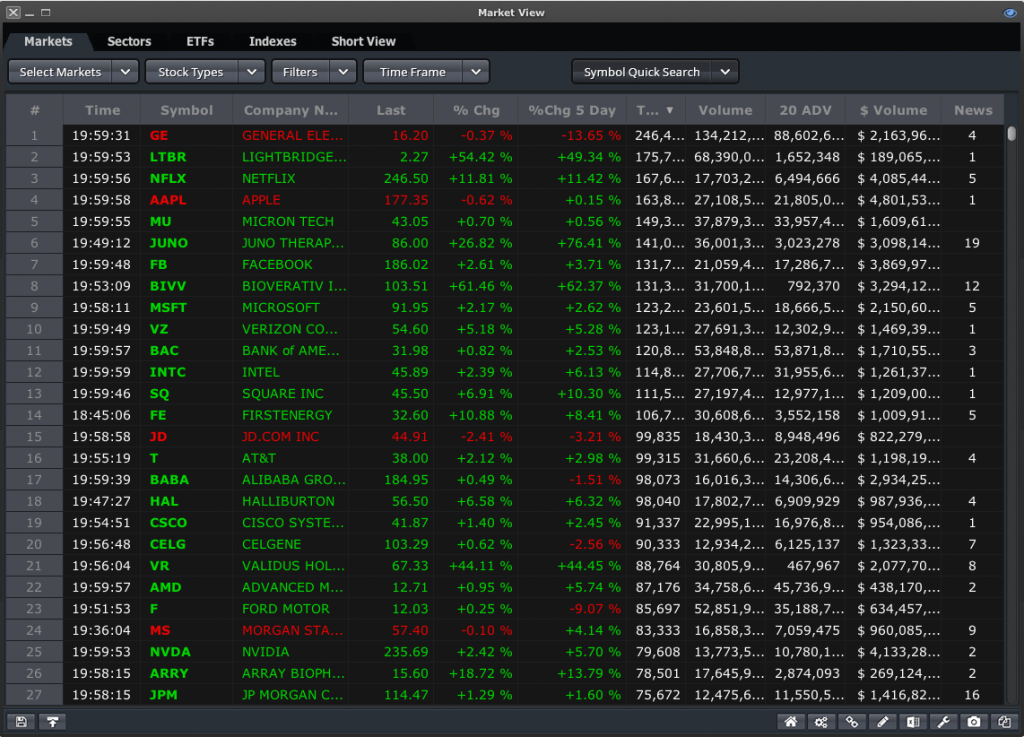
Among the trade alerts, you have alarms and filters. You can set them according to moving averages, prices, trades, volumes, etc. The color-coded alert types will prove very useful to you. These give you an overview of money flow rising and dropping in real time. Set these filters at the absolute least for effectiveness.
Are your trading methods decent? If the answer is “yes”, the scanners will provide you with real-time traders. You will achieve this if you do not just rush in without a solid and sound trading plan. Use the convenient method of entering “IF THEN” filters with individual stocks per single window in your Personal Alerts section. The relative ease of scanning for stocks and minute prior setup makes EquityFeed look and feel more approachable than other similar tools, such as Trade Ideas.
With EquityFeed’s toolset and overall stability, you will be able to pull up numerous watch lists, based entirely on your filters of preference. All you need is a good number of computer screens for every tool or window that you’ll require to work. And speaking of requirements, don’t forget to save any layouts and filters you need. This makes it easier for you as you don’t have to re-enter your preferred settings when using EquityFeed. The windows are fully customizable and flexible to use.
The Pros and Cons of EquityFeed
As mentioned above, EquityFeed is very stable and accessible. As a trader, you can filter through markets and observe them with absolute ease. The platform, however, is definitely far more useful for veteran stock traders that know their way around the markets and their respectable sectors. It takes into account personal strategy and provides all the necessary tools for larger trading during the course of the day. Another major bonus of using EquityFeed is the free two-week trial run, and you don’t need a credit card for this.
Naturally, EquityFeed comes with some issues as well. The price range can be a bit overwhelming for new traders, especially traders without a solid trade plan. Another, more technical issue is the software taking up a lot of your PC’s CPU performance. A good way to battle this is to have a lot of RAM available.
Summary
In short, whether you are new to the stock trade business or are an experienced pro looking to expand your reach, you will thrive with EquityFeed. The stock scanning and trade alert tools will improve your trading game, and the layout will be easy to learn and use. It is an investment that pays for itself with any trader, so by all means – get EquityFeed now and start trading the right way!
]]>One of the things that I personally loved about TD Ameritrade is that they do not have an initial required deposit if you want to use their services. This means that this platform is incredibly user friendly and if you want to try it out if you’re just a beginner you won’t have to spend a single penny before you start to trade. While TD Ameritrade may not be the best broker for day trading, they offer a lot of great tools for beginner traders and investors.
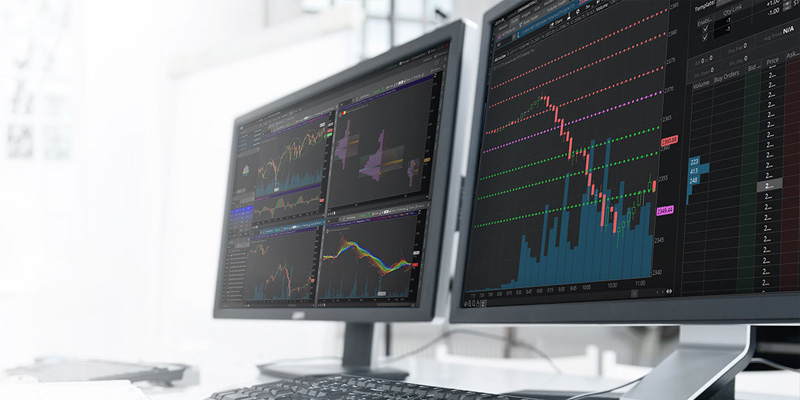
As well as tis simple feature, there are also a whole other range of features that make TD Ameritrade a decent platform to use, including their research abilities and customer service. Of course, there are some bad things when it comes to TD Ameritrade and those will also be explored as we go through the review.
Commission Structure
We will open up this review by immediately stating that, although TD Ameritrade is a fantastic platform, the cost per trade is very high when compared to other services. If you plan on trading stocks, you will be charged a flat rate of $6.95 per trade. If you want to trade options, it will cost you $6.95 including a 75 cents contract fee.

Although the prices are very high when it comes to this platform, TD Ameritrade does offer over 100 commission-free EFTs. However, if you sell a commission-free EFT within 30 days you will receive a charge of $13.90 (short-term charge).
Research and Features
When it comes to trading, research and news are your biggest assets. It is very important that the platform you’re using is supplying you with a lot of information about the stock you’re thinking about trading. TD Ameritrade has a number of very interesting tabs that make research about a stock very easy.

They have a social signal tab that allows you to see which stock is getting the most actions when it comes to social media. It also lets you see what the community are saying about a particular stocks. This allows you to keep up to date in real time with the stock you’re looking at. Their user interface also combined 5 news services into one effective design, making everything so much easier.
Charting Capabilities
TD Ameritrade is one of the more advanced systems I have seen in use and that is because it utilizes the Thinkorswim platform. This platform was acquired in 2009 by TD and has a number of advantages over the competition, including Etrade and Fidelity.
Thinkorswim allows investors to perform in-depth analysis with a lot of flexibility. What makes the Thinkorswim platform so useful is that it can be used with no minimums or trading criteria. This platform allows for over 300 different technical studies which is the most in the industry. It should therefore satisfy the majority of picky traders.
Conclusion
TD Ameritrade is one of the best platforms around, especially if you are a beginner without a lot of start-up cash. Their zero deposit requirement makes joining their platform a treat and you immediately get access to their advanced trading features, including their charting platform (which usually requires a minimum). The only issue with the platform is that their commission-fees are very high and this will put off a lot of frequent traders.
]]>The platform is actually older than Charles Schwab as it was opened in 1946. The company hold over 17 million account and manages $1.7 billion in customer assets. They have good customer service, excellent options when it comes to retirement investments and they are definitely a broker you should check out.
Commissions and Fees
Despite being focused towards the retirement and long-term investment side of things, Fidelity has some impressive fees when it comes to standard trading. They offer a flat-rate fee which is common among many of their competition and, as a result, you will only be charged $4.95 per trade. This is a lot cheaper than other platforms and makes this great if you don’t have a lot of startup cash. If you plan on trading options, you will be charged a $0.65 contract fee.

When it comes to mutual funds, Fidelity offers thousands. They offer over 13,000 mutual funds and 4,000 of these are NTF. If you want a fund that has a fee, you will be charged $49.95. However, unlike a lot of their competition, Fidelity doesn’t charge you when you want to sell. If you want to trade EFTs, Fidelity offers customers 91 commission-free EFTs. This is a nice number and is sure to attract a lot of investors. However, it is still behind some their competition (ETrade, etc.).
Research and Tools
Research is an area where Fidelity shines. When you bring up a stock, you will be given an array of options and stats that you can use before you make the trade. The number of options demonstrates the market that Fidelity is trying to capitalize on – which is the long-term investor. The interface is well laid out and gives you 12 third-party sources for research which, to this date, is the largest I have seen from any broker. Everything is where it needs to be and it is all mobile friendly so you can view it on the move. Fidelity is also one of the few provides that will give their own takes on stocks with detailed reports and educational pieces. The only other platform I know to do this is Charles Schwab.

Customer Service
Fidelity is one of the best when it comes to customer support. They are quick to answer the phone and give you any answer you need. They are incredibly helpful and knowledgeable when it comes to stocks and picked up the phone in under 2 minutes. Where they really shined was with their email support. They were excellent and none of our emails were ignored or missed. This is definitely a platform to look at if you want a great customer experience.
Conclusion
Fidelity is well-known for their mutual funds and IRAs but they also offer an adequate platform for trading stocks. They are known for their intensive research that is methodologically laid out in a way that any investor will understand. They offer a range of third-party methods to do research and are also one of the cheaper options when it comes to investing. The only real problem I could see with the broker is their mobile platform, which could do with a bit of tweaking.
]]>
Because LightSpeed is designed for quick trades, there are not a lot of options when it comes to mutual funds and EFTs. If you’re looking for IRAs and other long-term investments, LightSpeed will not be able to offer a lot. LightSpeed has some impressive features and very low fees, which are greatly appreciated by the day trading community. This review will go over the features of LightSpeed to see if it is the right platform for you. So, if you’re still curious to see what makes this platform tick, continue to read the article.
Commissions and Fees
If you’re trading very fast and frequently throughout the day, you’re going to want to make sure you’re not racking up a bill with your broker via commissions. LightSpeed solves this problem with a tiered commission system whereby the more trades you make the cheaper your fees. It’s as simple as that.

In addition, LightSpeed has two different tiered commission types – per trade and per share. If you choose the per share trading option, you will receive a flat-rate of $.0045 including/excluding a routing fee. If you order a larger number of shares you will receive a trade fee of $4.50. Options are the same but with a $.60 contract fee.
As the platform is dedicated to the equity trading side of things, there are no EFTs and Mutual fund options for you to trade.
Tools and Features
Because LightSpeed is so focused on making sure that you have the fastest platform possible, they don’t have a lot of tools when it comes to researching and learning. They do, however, have a ton of customization options and a load of interfaces for you to experiment with. The majority of these are from third-party providers by LightSpeed also has three privately owned platforms, including LightSpeed Trader, LightSpeed Web Trader and LightSpeed Sterling.

Their main platform (LightSpeed Trader) is incredibly fast, fluid and provides a decent platform when it comes to hyperactive trading. The platform requires an advanced eye as it is not at all pretty. It is purely designed for the expert who knows exactly what they’re doing and what they need to do it. The charting side of the platform is very basic and is extremely out of date. However, for a platform where every second counts, the application does the job perfectly.
Customer Service
As they are called LightSpeed, you would have thought that their customer service is equally as fast. When we were testing their customer service we found that they tended to answer the phone incredibly quickly and we got all our questions answered. However, where they lacked was in email. Some of our emails never got answered but when they did the response was helpful and friendly.
Conclusion
LightSpeed does exactly what it says on the tin. They provide a platform for advanced traders to execute trades as fast as possible. They are not the prettiest platform nor are they the most practical but they get the job done. As I have said before, if you are a beginner or are looking for long-term investment opportunities, we suggest you stay clear of their expert broker.
]]>
Not only does Scottrade feel very welcoming but they also have a range of features and tools that make them a popular broker to use for many traders. It is also worth noting that Scottrade has recently been picked up by TD Ameritrade is a 4 billion dollar deal. These two platforms will be integrated soon. As for their features, however, they have tons including adequate research and news coverage as well as a range of charting tools.
There are a few Scottrade reviews already available on the web. This short review will go over Scottrade and all of its features. If you’re interested to learn more about this platform, continue to read on.
Commission Fees
Scottrade is a very clean platform that doesn’t have any hidden details or gimmicks that will surprise you further down the line. They are an honest platform and only give you what they offer you. This includes a flat rate of $6.95 for stock trades with an added 5% if you are trading penny stocks. These prices are fairly cheap when you compare them to Fidelity and Charles Schwab. For options, you will be charged $6.95 plus a 70 cents contract charge. This makes Scottrade one of the more inexpensive choices when it comes to options.

As we have mentioned above, there are no gimmicks and no tiered systems you have to worry about. As more mutual funds, Scottrade offers thousands of them – 14,000+ to be exact. These will cost you $17, which is lower than most of their competitors. The platform, however, doesn’t have any commission-free EFTs.
Research and Tools
Scottrade provides investors and traders with all they need to execute with precision and surety. They provide a range of research tools and features that make moving around the screen very easy and simple. They have recently undergone a website remodel and have made everything easy to access, especially for beginners. One area that Scottrade does full short with their third-party research. Most platforms usually offer at least 4-6 but Scottrade only offers a three, which is pretty dreadful when you consider that Fidelity offers 6! The three third-party sources they offer include Standard & Poor’s, Reuters, and Market Edge.

Customer Service
As we have already mentioned above, Scottrade is pretty good when it comes to customer service rising above a lot of other online brokers. They are one of the few platforms that rely on their local branches to answer questions and queries from their customers. When you have a problem it will quickly be solved by a local representative from a local branch. Their calling hours are the standard 8:30am to 5pm but this means they don’t offer 24/7 support, which is disappointed when you compare them to other brokers.
Conclusion
Scottrade may be disappearing in the next few months but, for now, it is still an excellent platform to use. They are incredibly beginner and user-friendly thanks to their helpful support and guidance even in the early stages of trading. They are one of the few providers that rely on their local branch networks as a means of support and this means you receive some of the best I have experienced. They do tend to full short on their third-party research but this shouldn’t be too much of an issue for most traders. Overall, I was satisfied with the service I received from Scottrade.
]]>
In fact, that is exactly what Robinhood has done. They have stripped away any form of desktop application and have gone 100% mobile. Robinhood, as a company, started in 2013 and began as a venture project. As a result, they relied heavily on their investors to keep them afloat. However, they have now began to explore other monetization methods.
This review will be going through Robinhood and will briefly explain its features. If you’re not a fan of the standard commission fees and don’t like to trade at home, this might be the perfect solution for you.
Commissions and Fees
Well, I am not sure if I should include this title because there are no fees when you’re using Robinhood. To this day, they have kept up their promise of creating and providing a zero commission fee structured broker. They also do not require any initial account deposit to get started with. However, this begs the question of how they actually make money from this business model.
More recently, Robinhood as began to explore other ways to make money on their platform and have come up with a paid membership that clients can get to give them more buying power. The new model also gives traders the ability to trade after-hours. The price of the gold membership depends on how money you have deposited into your Robinhood account at the time. I won’t break down the numbers for you but you can check them out on their website.
Features and Things You Should Know
Although the concept of zero commission seems like a fantastic idea, there are a few catches. The first one is that the Robinhood system is built for mobile and mobile only. Sure, this has its benefits but for most traders they will want to sit down at their computer and work through the stats and charts. That’s the other thing you need to know about Robinhood, they don’t have any advanced features – its very bare bones.

In addition, when it comes to the simple things like actually ordering the stocks, you should be aware that limit orders and stop loss orders have only recently been introduced and you can only pull up publically listed stocks. There is no support for pink sheets or OTC. In addition, mutual funds and EFTs are not supported. This platform is only decent for equity trades.
Conclusion
On the face of things, Robinhood trading is a dream come true. Finally, a platform that doesn’t charge any commission. However, as you dig deeper into the system, things become a little clearer. With the zero commissions comes less research and features and a limited design. You can only trade equity on the application and there is no support for mutual funds, options or ETFs.
In addition, when you do the math and compare the gold membership to other brokers, it actually isn’t economically possible to save money with Robinhood despite the zero commission. With this platform, the concept is good but the execution is a little disappointing.
]]>